Sign in. It’s quick, free and it’s up to you.
An account is an optional way to support the work we do. Find out more.
Sign in. It’s quick, free and it’s up to you.
An account is an optional way to support the work we do. Find out more.
BIRDWATCH IRELAND HAS criticised a pest control company for issuing a warning about nesting seagulls, suggesting claims that the birds could nest on your windowsill are overblown.
Niall Hatch, the organisation’s communication and development manager, told The Journal that the arrival of the birds does not need to come with a warning, as the main intruder on their lives are human beings.
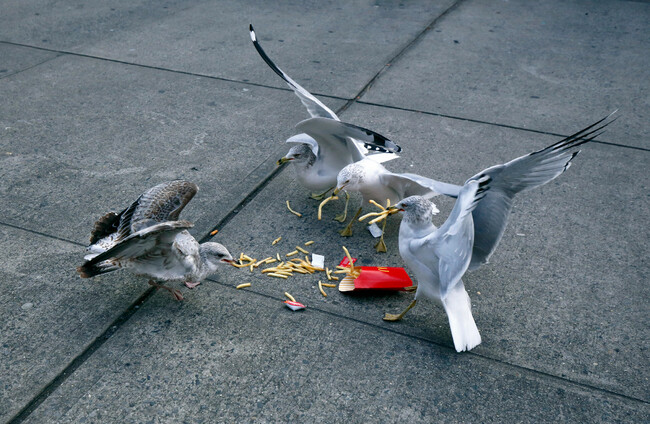
While everyone is familiar with gulls swooping from the sky to steal a chip or ice cream from an unsuspecting beach-goer, Hatch said that it’s actually a “very small minority” of the population that do so.
This is because some gulls have lost their respect for humans after poor behavior by the general population towards the birds, such as feeding them, Hatch said.
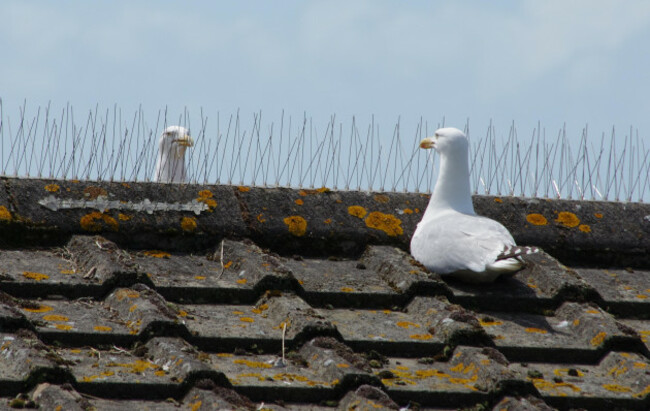
Yesterday, Rentokil warned the public interactions between humans and seagulls will begin to increase as Ireland heads into summer months, suggesting to home and business owners to use bird nets and bird spikes on top of their properties to deter the animals from nesting there.
Rentokil said the presence of bird nests on top of homes and businesses could lead to the arrival and later infestation of bird mites, beetles and fleas.
The company suggested that bird spikes and bird nets are eco-friendly, humane ways to deter gulls from making a home out of yours.
Hatch said that the public should take into account that humans are in the gulls’ environment and that the birds use these areas as they view them as safe places to nest – similar to how the same species would use islands while out at sea.
Rentokil also suggested that similar deterrents could also be used to stop gulls from nesting on top of windowsills but Hatch said that homeowners would need a “very large” windowsill for a gull to land on it.
He added that the reason gulls’ can become aggressive is a direct result of human behaviour. Hatch said feeding gulls begins the process for the bird to start losing respect for humans and later leads to them joining in on the French-fry dive-bombing missions.
“We always urge people, please don’t feed gulls. It’s very important that people don’t,” Hatch said.
“If you walk down the boardwalk on the Liffey or down at Howth pier you’ll see people just casually throwing loads of chips and bits of sandwiches all the time and that’s a really bad thing.”
While some of the birds have lost respect for humans, others are naturally trying to protect their nests in unnatural, urban environments, Hatch said. Hatch added that it is very important that bins are kept covered and rubbish is tidied away.
Research conducted by Birdwatch Ireland has also found that the population of gulls has fallen by 90% over the last 30 years.
The Birdwatch Ireland representative also said that the belief that seagulls are getting larger is an urban legend, and that any trip to the Natural History Museum would debunk it.
To embed this post, copy the code below on your site
have your say